 TruBlu Brotherz
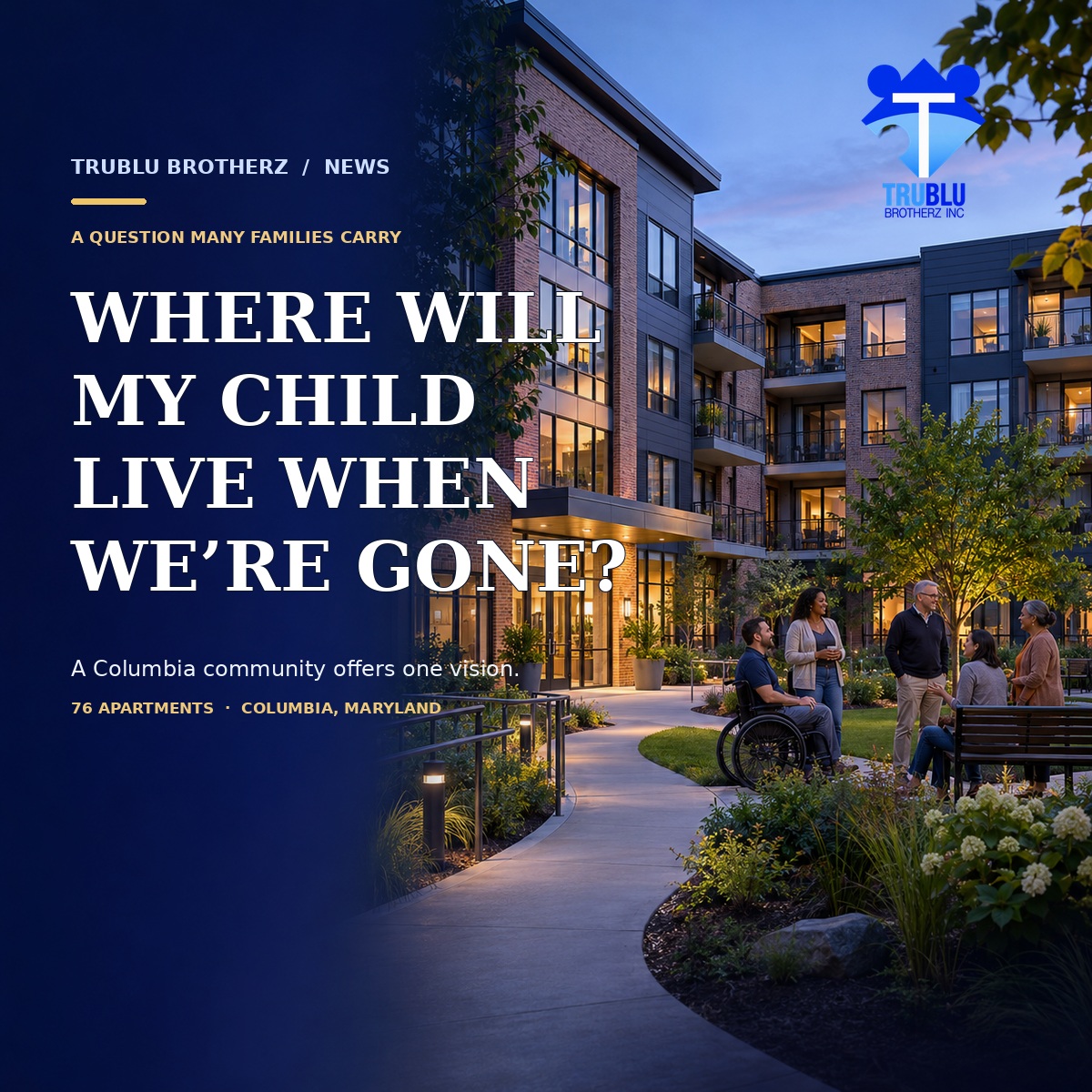
Patuxent Commons officially opened in November 2025. The 76-apartment community was developed by Mission First Housing Group from an intergenerational housing concept created by the Autism Society of Maryland. Its design brings residents of different ages and abilities into one neighborhood, with shared spaces meant to make everyday connection easier.
One community, three kinds of households
Howard County’s opening announcement describes the apartment mix this way:
- 19 apartments for low-income adults with disabilities
- 30 apartments for older adults
- 27 apartments for individuals and families
Residents can use indoor and outdoor gathering spaces for events, programs, classes, crafts, and other activities. The location is near a public bus route, shopping, recreation, healthcare, and job opportunities—practical connections that can matter for people who do not drive or prefer other ways to get around.
The idea is to make community part of the housing plan: neighbors have places and reasons to meet, rather than being separated into different buildings by age or disability. Autism Society of Maryland Executive Director Melissa Rosenberg said, “Patuxent Commons may be one project, but it embodies a vision that we are determined to see replicated.”
A model, not a complete answer for every family
Patuxent Commons does not settle the larger question for every autistic person or family. People need different levels of support, choices, affordability, and independence. This project is one example of how housing can be designed to include disabled adults as part of a wider community, while giving residents more chances to build familiar relationships with neighbors.
The project website currently reports that Patuxent Commons is fully leased. Families interested in future availability or learning from the model can check the property website and sign up for its updates. Details about services, eligibility, and availability should always be confirmed with the property team.
One building cannot answer the question for every family. But a real community can help us picture more possibilities—and remind us that autistic adults deserve homes, choice, connection, and a place in the neighborhood.
Sources
- Howard County Government: Patuxent Commons officially opens, November 5, 2025
- Autism Society of Maryland: Patuxent Commons housing overview
- Patuxent Commons: project information and current leasing update
This independently written TruBlu Brotherz article summarizes information from the linked organizations. Project status and housing availability can change; check the original sources for current details.